
CENNZOROBOTIX

Technology

The Technology Stack Behind WAFEE 

WAFEE is built as a vertically integrated robotic architecture

Every joint. Every sensor. Every line of code. One system

WAFEE — humanoid platform engineered for environments beyond the lab

Blueprint Archive

fig.05 — fig.03

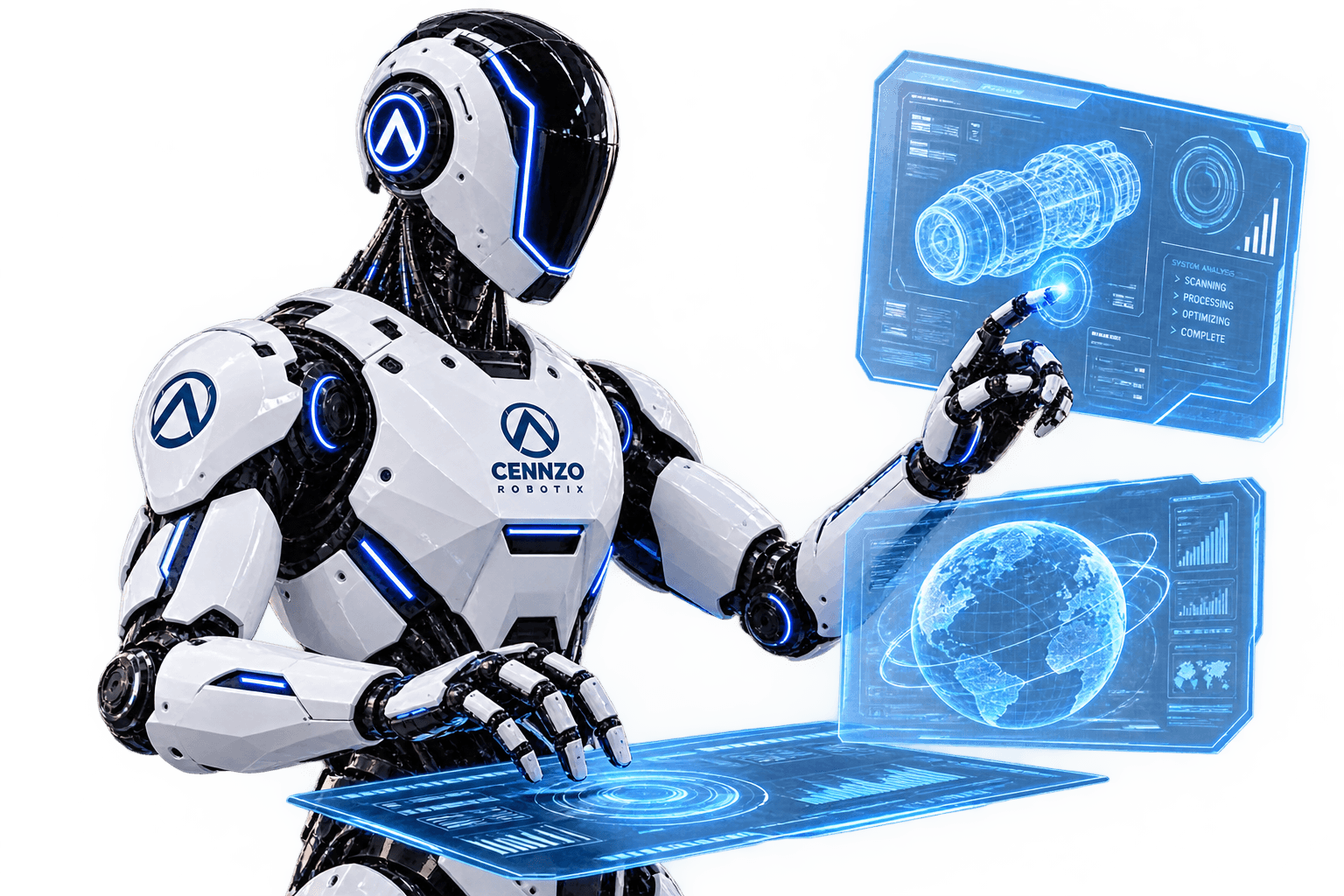
WAFEE System Architecture — Concept DiagramConcept visualization
WAFEE Platform Sample — ReferenceConcept visualization
WAFEE System Architecture — Concept DiagramConcept visualization
System Index

System Register

Nine subsystemsOne Machine

Every joint, sensor and line of code is treated as a first-class engineering subsystem. Select a system to inspect its technical register below.

Registry

Technical Register

9 sheets · v1.0 · confidential

01

Mechanical Architecture

A lightweight structural system provides the mechanical foundation for the robot

No.Specification
01High stiffness-to-weight ratio
02Controlled mass distribution
03Serviceability
04Modular joint interfaces
05Structural redundancy where required
06Protection of critical internal systems
02

Actuation

Humanoid performance depends on the quality of its joints

No.Specification
01High torque density
02High efficiency
03Backdrivability where appropriate
04Thermal stability
05Position and torque control
06High-speed feedback
07Mechanical durability

NoteThe platform is being developed around advanced electric motor and transmission technologies, including PMSM/BLDC-class architectures and high-performance servo control

04

Compute & AI

Onboard computing supports the full intelligence pipeline of the platform

No.Specification
01Perception
02Localization
03Mapping
04Motion planning
05Manipulation planning
06Predictive control
07Anomaly detection
08Natural-language interfaces
09Mission intelligence

NoteAI is treated as one layer of the robotic system — not a replacement for deterministic safety and control

05

Control

The control stack connects intelligence to physical action

L1Mission Layer
L2Behavior & Task Planning
L3Motion Planning
L4Whole-Body Control
L5Joint Control
L6Motor Control
L7Sensors & Feedback

NoteThis architecture allows high-level intelligence to coexist with fast, deterministic low-level control

03

Perception

A robot cannot intelligently act without understanding its environment

No.Specification
01RGB cameras
02Depth sensing
03LiDAR where mission requirements justify it
04IMU
05Joint encoders
06Force/torque sensing
07Tactile sensing
08Environmental sensors
09Thermal sensing

NoteSensor fusion converts raw measurements into a consistent representation of the robot and its environment

06

Power

WAFEE requires a power architecture capable of delivering high instantaneous power while maintaining safety and efficiency

No.Specification
01High-energy battery system
02Battery management system
03Power distribution
04DC/DC conversion
05Motor inverters
06Protection and isolation
07Current and voltage monitoring
08Thermal monitoring
07

Thermal Management

Heat is one of the fundamental engineering constraints in high-performance humanoids

No.Specification
01Thermal conduction from heat sources
02Cold plates
03Closed-loop liquid cooling where required
04Heat exchangers
05Thermal storage
06Temperature and flow monitoring
07Localized thermal barriers
08Passive heat spreading

NoteThe architecture is intended to reduce dependence on conventional exposed fans in mission-critical areas

08

Materials & Protection

Material selection is mission dependent

No.Specification
01Titanium alloys
02Aluminum alloys where appropriate
03Carbon-fiber composites
04Carbon-carbon composites for specialized high-temperature zones
05Silicon-carbide-based ceramics/composites
06Inconel-class nickel alloys for localized high-temperature hardware
07Ceramic insulation
08Aerogel-based thermal insulation

NoteNo single material is expected to solve every environmental requirement. WAFEE uses zoned material architecture based on load, temperature, pressure, corrosion and serviceability

09

Software

WAFEE's software architecture is designed as a modular robotics stack

No.Specification
01Hardware abstraction
02Real-time control
03State estimation
04Perception
05Localization and mapping
06Motion planning
07Manipulation
08Behavior planning
09Mission management
10Diagnostics
11Human-robot interaction
12Fleet management

NoteThe platform is designed for continuous software evolution without requiring complete hardware redesign

Cennzo Robotix

From First PrinciplesTo Field Validation

See how our engineering discipline turns research into mission-ready capability